
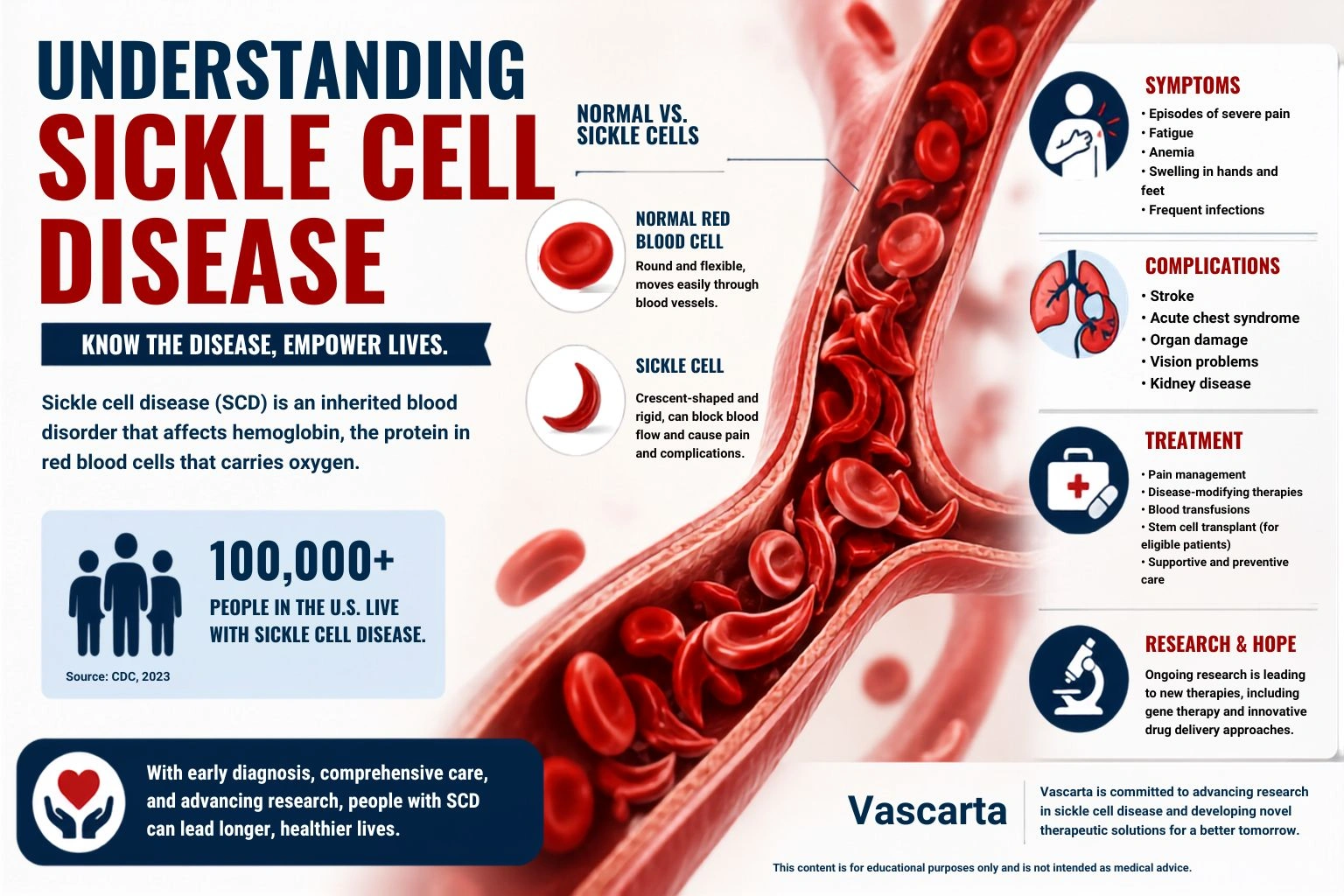
Sickle cell disease touches nearly every part of a person’s life. It can bring on episodes of severe pain, anemia, exhaustion, recurring infections, and complications that reach major organs. And yet a lot of people still aren’t clear on what actually causes it, how doctors diagnose it, or what treatment even looks like.
Sickle cell disease (SCD) is an inherited blood disorder that changes both the shape and behavior of red blood cells. Instead of staying round and flexible, affected cells can stiffen up and take on a crescent, or “sickle,” shape. Those cells tend to break down faster than normal ones, and they can also block blood flow through the body’s smaller vessels.
The result is a condition that requires ongoing medical care and close monitoring, for life.
This guide walks through sickle cell disease in plain language, how it develops, the symptoms and complications to know about, how it gets diagnosed, current treatment approaches, and where research is headed.
What Exactly Is Sickle Cell Disease?
Sickle cell disease refers to a group of inherited blood disorders caused by changes in the gene responsible for hemoglobin, the protein inside red blood cells that carries oxygen around the body.
The most common form is sickle cell anemia, though other forms exist depending on which hemoglobin gene variants a person inherits.
When red blood cells contain abnormal hemoglobin, they can stiffen and take on that sickle shape under certain conditions. Normal red blood cells are flexible enough to squeeze through even the tiniest blood vessels. Sickle-shaped cells often can’t do that as easily.
That creates two major problems:
- Hemolysis: Red blood cells break down earlier than they should.
- Vaso-occlusion: Sickle-shaped cells physically block blood flow.
Between those two processes, you get a pretty good explanation for most of the symptoms and complications tied to SCD.
What Causes It?
Sickle cell disease is inherited full stop. It’s not caused by diet, lifestyle, or anything a person picks up from someone else.
A person develops SCD by inheriting certain altered hemoglobin genes from both parents. Genetics can play out differently depending on what’s passed down. Someone who inherits one sickle hemoglobin gene and one normal one generally ends up with sickle cell trait, not the disease itself.
Sickle cell trait is a different thing entirely, and it usually doesn’t cause the chronic symptoms that come with SCD. For anyone wondering about their own risk of passing an inherited hemoglobin condition to their kids, genetic counseling can be a useful next step.
Trait vs. Disease What’s the Actual Difference?
These two terms get mixed up a lot.
- Sickle cell disease: a person has inherited a combination of hemoglobin gene variants capable of causing chronic illness anemia, pain episodes, and other complications, depending on the specific type.
- Sickle cell trait: a person carries just one sickle hemoglobin gene and generally doesn’t have the disease itself.
The distinction matters because the health implications and what kind of care someone needs aren’t the same at all.
What Does It Actually Feel Like? (Symptoms)
Symptoms vary a lot from person to person. Some people deal with frequent complications; others have relatively few. The specific type of SCD someone has also shaped how the disease plays out.
Common symptoms include:
- Episodes of severe pain
- Chronic or recurring anemia
- Fatigue
- Shortness of breath
- Swelling in the hands and feet
- Jaundice
- Frequent infections
- Delayed growth in children
- Vision problems
- Symptoms tied to organ complications
One of the most recognizable and often the most feared complications is a vaso-occlusive pain episode, usually just called a pain crisis. During one of these, sickled red blood cells obstruct blood flow. The resulting drop in oxygen and rise in inflammation can cause real, significant pain, often in the back, chest, arms, legs, or abdomen. How bad it gets, and how long it lasts, can vary quite a bit from one episode to the next.
Why Does It Cause So Much Pain?
The pain in SCD is closely tied to vaso-occlusion. When sickled cells stiffen up and interact abnormally with blood vessel walls and other cells, they interfere with normal circulation. Less blood flow means less oxygen reaching tissue, and that triggers inflammation.
Roughly, the sequence looks like this:
Abnormal hemoglobin → red blood cells sickle → blood vessels get blocked → blood flow drops → inflammation and tissue injury follow → pain
The real biology is more complicated than that, but this simplified version captures why the pain tends to recur. And it’s worth noting: pain itself isn’t the only concern. Repeated episodes and ongoing inflammation can add up to cumulative damage over time, even between crises.
The Bigger Picture: Complications
SCD isn’t confined to one part of the body — it’s systemic, and it can affect multiple organs and systems at once.
- Stroke: People with SCD face an increased stroke risk. Children with the disease may go through specialized screening to catch those at higher risk early.
- Acute chest syndrome: This is a serious lung-related complication that can bring on chest pain, fever, and trouble breathing. It needs urgent medical attention; this isn’t something to wait out.
- Anemia: Sickle-shaped red blood cells tend to have a much shorter lifespan than healthy ones, and that faster breakdown leads to chronic anemia which in turn can mean fatigue, weakness, shortness of breath, and less tolerance for exercise.
- Kidney problems: SCD can affect kidney function over time, which is part of why regular monitoring matters so much.
- Eye complications: Changes in blood flow can affect the retina and, by extension, vision.
- Infections: People with SCD can be more vulnerable to certain serious infections, especially if the spleen has stopped functioning properly.
All of this is why managing SCD has to go well beyond just treating pain when it flares up.
How Do Doctors Diagnose It?
Diagnosis usually comes down to blood testing. In the U.S., newborn screening programs catch a large share of babies with sickle cell disease shortly after birth. From there, additional testing can pin down exactly which type of hemoglobin is present and distinguish between the different sickle cell conditions.
Diagnostic tools typically include:
- Newborn screening
- Hemoglobin analysis
- Standard blood tests
- Genetic testing, when it’s relevant
- Follow-up testing to clarify ambiguous results
Catching it early matters; it means appropriate care can start before complications have a chance to develop. For families who’ve just received a diagnosis, a hematologist or another specialist familiar with SCD is the right person to help build a long-term care plan.
Treatment: What Are the Options?
There’s no single treatment that works for everyone with SCD. What’s appropriate depends on the specific type of the disease, a person’s age, their symptoms, any existing complications, and their overall health.
Management can involve:
- Pain treatment
- Hydration strategies
- Vaccinations
- Infection prevention
- Blood transfusions
- Medications that modify how the disease behaves
- Stroke prevention
- Ongoing monitoring for organ complications
- Curative therapies, for patients who qualify
Hydroxyurea is probably the best-known disease-modifying treatment; it can raise fetal hemoglobin levels and reduce certain complications for a lot of people with SCD. Beyond that, the treatment landscape has genuinely expanded in recent years. The FDA has approved newer therapies for specific SCD populations, and gene-based treatments have emerged as a significant area of active development.
Because things are moving quickly here, it’s worth talking to your actual healthcare team about the most current options rather than leaning on older information you might have come across.
Can Sickle Cell Disease Be Cured?
Some treatments can offer a functional cure or at least long-term control for select patients. But there isn’t one universal cure available to everyone with SCD.
Hematopoietic stem cell transplantation can be curative for some people, though it comes with real risks and requires both an appropriate donor and careful medical evaluation. More recently, gene therapy and gene-editing approaches have opened up new possibilities by targeting the underlying biological problem instead of just managing symptoms one at a time.
That said, eligibility, availability, risk, long-term outcomes, and cost are all serious factors to weigh. Anyone considering these options should be talking directly with SCD specialists qualified to guide that conversation.
Where Does Research Stand?
Because the biology of SCD is genuinely complex, research is still working to fill in a lot of gaps. Current areas of focus include:
- Red blood cell sickling
- Hemoglobin biology
- Vascular inflammation
- Oxidative stress
- Pain pathways
- Blood vessel function
- Organ damage
- Novel drug-delivery systems
- Gene therapy and gene editing
- New disease-modifying medicines
Increasingly, researchers aren’t just asking whether a treatment reduces pain the moment they want to understand why complications develop in the first place, and how to intervene before damage becomes irreversible. That’s a meaningful shift in how drug development approaches this disease.
Some companies are also exploring alternative delivery methods for therapeutic compounds. Vascarta, for instance, is researching novel therapeutic approaches and transdermal drug-delivery technology aimed at unmet needs in this space, including work related to sickle cell disease and transdermal curcumin-based approaches.
As with any investigational research, though, early findings shouldn’t be read as proof that a treatment is safe or effective; that conclusion only comes after proper clinical studies and regulatory review.
What Triggers a Complication?
Triggers differ from person to person, but common ones include:
- Dehydration
- Infection
- Extreme temperatures
- Low oxygen levels
- Physical stress or significant exertion
- High altitude
- Emotional or physiological stress
Sometimes a pain episode happens with no obvious trigger at all. That’s part of why it’s worth working with a healthcare team to identify personal warning signs and build an individualized management plan rather than relying on generic advice.
Living With Sickle Cell Disease
SCD is a lifelong condition, but modern care has come a long way in helping people manage symptoms and lower their risk of serious complications. A solid care plan usually involves:
- Regular medical appointments: routine monitoring catches changes early.
- Medication adherence: disease-modifying therapies only work as well as they’re taken.
- Vaccination and infection prevention: especially important given the increased infection risk.
- Staying hydrated: a simple but genuinely important piece of day-to-day management.
- Mental health support:: living with chronic pain and a lifelong illness takes a toll, and that deserves real attention as part of overall care, not an afterthought.
- Specialist care: hematologists and multidisciplinary SCD teams are best positioned to coordinate complex needs.
Above all, individualized guidance from a healthcare professional should take priority over generic advice, including this article.
The Bottom Line
Understanding sickle cell disease starts with recognizing it’s far more than “a blood disorder.” Abnormal hemoglobin changes how red blood cells behave, and that ripple effect touches anemia, blocked blood flow, inflammation, pain, and organ complications alike.
The good news is that treatment and research keep moving forward. Between established disease-modifying medicines, stem cell transplantation, and emerging gene-based therapies, the SCD treatment landscape looks meaningfully different than it did even a decade ago. Researchers continue investigating new therapeutic targets and delivery technologies that could open up further options down the line.
Vascarta’s work on sickle cell disease and transdermal drug-delivery approaches is part of that broader research effort though, as with any investigational therapy, findings need to be validated through proper clinical studies before any conclusions can be drawn about safety or effectiveness.
For people actually living with SCD, the most important step remains consistent care with a qualified healthcare team. Early diagnosis, preventive care, the right treatment plan, and regular monitoring can genuinely change how the disease plays out. And the road ahead depends on research that keeps addressing both the symptoms people feel and the underlying biology driving them.
Frequently Asked Questions
Is sickle cell disease genetic?
Yes. It’s an inherited condition caused by specific changes in hemoglobin production, passed down from a person’s biological parents.
Is it contagious?
No. SCD is genetic; it can’t be spread through contact, food, air, or any other ordinary form of exposure.
What’s the difference between sickle cell trait and sickle cell disease?
Trait generally means someone carries one sickle hemoglobin gene without having the disease itself. Disease means someone has inherited a combination of variants capable of producing the illness.
What’s the most common symptom?
Pain episodes are probably the most recognized, but the disease can also cause anemia, fatigue, infections, and complications affecting the lungs, kidneys, brain, and eyes.
Is there a cure?
For some patients, yes stem cell transplantation can be curative, and newer gene therapies have opened additional possibilities. These options aren’t right for everyone and require evaluation by a specialist.
Also Read: What Is Preclinical Research