
Taking medication doesn’t always mean swallowing a pill or getting a shot. For some therapies, the medicine can be delivered right through the skin and gradually make its way into the bloodstream instead. That approach is what’s known as transdermal drug delivery.
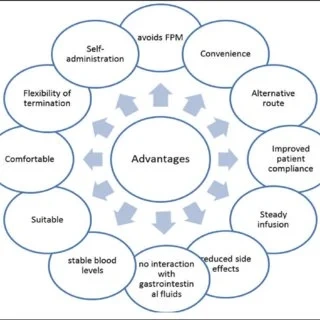
The advantages of this technology have turned it into a genuinely active area of pharmaceutical research and development. Done well, transdermal systems can provide controlled release, skip the digestive system entirely, and offer a more convenient alternative to certain conventional dosage forms.
For patients who struggle to swallow pills, or who need steady drug exposure over a longer stretch of time, this can be a real advantage. That said, transdermal delivery isn’t a fit for every drug or every patient; it comes down to the drug’s own properties, the characteristics of the skin, the formulation, and the specific delivery technology involved.
This guide covers how transdermal delivery actually works, walks through its major benefits, and looks at where this technology fits into modern pharmaceutical development.
What Transdermal Drug Delivery Actually Is
Transdermal drug delivery means administering a medication through the skin so the active ingredient can reach systemic circulation in your bloodstream, essentially, not just the surface tissue.
That’s a meaningful distinction from a topical cream, which is generally meant to act right where you apply it. A transdermal product, on the other hand, is engineered to push the drug across the skin and into the body as a whole.
A typical transdermal system usually includes:
- A formulation containing the drug
- An adhesive or delivery layer
- A protective backing
- Some kind of membrane or mechanism that controls the release rate
Skin exists to protect the body, which is great for your health but a genuine obstacle for drug delivery. The outermost layer, the stratum corneum, is particularly stubborn, since its whole job is limiting what gets in.
So pharmaceutical scientists have to design formulations and delivery technologies capable of moving a meaningful, controlled, and predictable amount of drug across that barrier, not too little, not too much.
How Does It Actually Work?
The basic mechanics are fairly straightforward. A transdermal formulation goes on the skin, the drug works its way through the skin’s layers, and it eventually reaches systemic circulation.
A handful of factors shape how that process unfolds:
- The drug’s chemical properties
- Molecular size
- How soluble it is in lipids versus water
- Concentration
- The condition of the skin it’s applied to
- How the formulation itself is designed
- The specific delivery technology used
- How long it stays in contact with the skin
Worth noting: the goal here isn’t simply getting a drug to penetrate skin at all. It’s getting it to penetrate in a controlled, therapeutically meaningful way. That distinction actually matters a lot — too much penetration can create safety issues, while too little just means the treatment doesn’t work.
The Main Benefits of Transdermal Drug Delivery Systems
The upside of this approach goes well beyond simply being an alternative to a tablet. Depending on the drug and how the product is engineered, transdermal delivery can offer several real advantages.
1. It Skips the Digestive System Entirely
One of the clearest benefits is that transdermal delivery doesn’t require the drug to survive a trip through the stomach and intestines.
That matters for drugs that could be affected by digestive conditions or the process of digestion itself. It’s also genuinely useful when oral administration is difficult or just not a great option for a given patient.
Take someone who struggles to swallow pills, for instance a suitable transdermal formulation could be much easier for them to manage day to day than an oral medication.
Still, whether a given drug can actually be delivered effectively through skin comes down entirely to its own chemical properties. Not every drug qualifies.
2. It Can Sidestep First-Pass Metabolism
When you take a drug orally, it gets absorbed through the gut and routed through the portal circulation straight to the liver. Along the way, some drugs get significantly broken down before they ever reach general circulation, a process known as first-pass metabolism.
Transdermal delivery bypasses the gastrointestinal tract, which means it can also reduce the impact of that hepatic first-pass effect for suitable drugs.
That doesn’t automatically mean every transdermal drug ends up with higher bioavailability — it really depends on the specific drug and delivery system. But avoiding first-pass metabolism is still one of the bigger reasons researchers keep investigating this route.
3. It Allows for Controlled, Gradual Release
This might be the single biggest potential advantage: controlled release.
Rather than delivering an entire dose all at once, a well-designed transdermal system can release medication steadily over an extended period. That helps keep drug concentrations sitting within a desired therapeutic range, rather than spiking and dropping repeatedly.
This kind of steady, controlled delivery tends to be especially useful for medications where more stable exposure is genuinely preferable; a formulation built for extended release can smooth out the sharp peaks and troughs you’d otherwise see with other dosing methods.
4. It’s Genuinely Convenient
Convenience matters more than people sometimes give it credit for.
Applying a transdermal product can be a lot simpler than remembering to take several oral doses spread throughout the day particularly for patients managing a long-term treatment. A simpler routine often makes the whole process of managing medication less of a mental burden.
That said, convenience should never override proper medical guidance. Patients should always stick to the instructions that come with an approved medicine, and bring up any concerns with a healthcare professional rather than improvising.
5. It May Help With Medication Adherence
Sticking to a medication schedule is genuinely hard for a lot of people. Doses get forgotten. Some people just don’t like swallowing tablets. Others are juggling complicated treatment schedules on top of everything else in their lives.
A transdermal system can cut down on how many times a patient actually has to administer a dose. A product that delivers medication continuously over several days, for example, means far fewer individual dosing events than something requiring multiple daily doses.
How much this actually helps with adherence still comes down to the specific product and the individual patient.
6. Some Systems Can Be Stopped Easily
Certain transdermal products can simply be removed if treatment needs to stop which offers a real practical edge over a dose you’ve already swallowed or been injected with.
That said, removing a patch doesn’t necessarily mean drug exposure stops instantly. Depending on the medication and delivery system, some drugs may linger in the skin or continue entering circulation for a while afterward.
So patients should always follow product-specific instructions rather than assuming a patch’s effects end the moment it comes off.
Why Does This Matters for Pharmaceutical Development?
These advantages aren’t limited to patients; transdermal delivery is also a genuinely active field of pharmaceutical research in its own right.
Before a potential therapy can advance toward human studies, pre-clinical research can help researchers evaluate its biological activity, safety and potential therapeutic effects.
Scientists and drug developers are actively working on ways to improve how therapeutic compounds move through skin. Companies such as Vascarta sit within this broader pharmaceutical and drug-delivery landscape, where advanced delivery technologies help tackle challenges that come with more conventional administration methods.
Intellectual property also plays an important role in pharmaceutical innovation, particularly when researchers develop new formulations or delivery technologies. Vascarta’s patent portfolio provides another example of how drug-delivery research can progress from scientific development toward protected technology.
For a company working in this space, the scientific puzzle is genuinely interesting: the skin is simultaneously the target surface and the main obstacle that has to be overcome. Research into formulation science, delivery mechanisms, and skin permeability all feed into figuring out whether a given active ingredient is actually a strong candidate for transdermal delivery in the first place.
For businesses and researchers exploring advanced drug-delivery technologies, understanding these underlying principles is basically step one before evaluating any potential transdermal product.
7. It Can Simplify Long-Term Treatment
Long-term treatment often means sticking with a medication routine for months, sometimes years. A treatment that requires frequent dosing can become a genuine burden to keep up with over that kind of timeline.
Transdermal systems can, for suitable drugs, offer longer intervals between doses cutting down on how often a patient actually has to actively manage their medication.
Someone taking conventional medicine multiple times a day, for example, has to build their whole schedule work, travel, and sleep around those doses. A longer-acting transdermal option could meaningfully simplify that. The exact interval, of course, depends entirely on the approved product.
8. It Helps Patients Who Struggle With Oral Medicine
Not everyone can comfortably take pills or capsules. Potential obstacles include:
- Difficulty swallowing
- Nausea
- Certain gastrointestinal conditions
- General challenges with oral administration
- Trouble sticking to a frequent dosing schedule
For the right drugs, transdermal delivery opens up another route of administration entirely. That’s particularly valuable in pharmaceutical development, since having multiple delivery options on the table helps address a wider range of patient needs.
9. It Offers a Needle-Free Alternative
Injections are effective and often necessary for a lot of therapies. But plenty of patients would rather avoid needles when there’s a reasonable non-invasive alternative available.
Transdermal delivery doesn’t require breaking the skin with a needle, which makes it an appealing area of research for therapies that would otherwise require frequent injections.
That said, transdermal delivery can’t just replace injectable medicines across the board. A lot of biological molecules and other drugs simply aren’t capable of crossing skin in the quantities needed to actually work therapeutically.
The Flip Side: What Makes Transdermal Delivery Hard
Understanding the benefits here really requires understanding the limitations too.
Skin is an incredibly effective barrier that’s the whole point of it. Plenty of drugs just can’t cross it efficiently, no matter how the formulation is tweaked.
A drug intended for transdermal use generally needs the right kind of properties to make skin penetration feasible in the first place molecular size, lipophilicity, potency, and formulation characteristics all play a role in whether it’s even worth pursuing.
Other real challenges include:
- Skin irritation
- Allergic reactions
- Skin permeability that varies from person to person
- Limits on how much drug a patch can actually hold
- Difficulty delivering larger molecules
- Adhesion problems (patches not staying put)
- Temperature and environmental effects
- Meaningful variability between individual patients
This is exactly why building a successful transdermal product usually takes a serious amount of formulation research and testing before it ever gets close to market.
The Technologies Pushing This Field Forward
Traditional patches are only one piece of this puzzle. Researchers are actively exploring several other approaches to get drugs across skin more effectively.
- Chemical permeation enhancement: Certain substances can temporarily alter the skin barrier to increase how much drug moves through it. The tricky part is achieving better penetration without triggering unacceptable irritation or actual skin damage.
- Microneedles: These systems use extremely small structures that interact with the outer layers of skin. They’re being studied specifically for drugs and biologics that are difficult to deliver through conventional patches alone.
- Iontophoresis: This approach uses a low electrical current to help move certain charged molecules through the skin, another way to influence how a drug gets transported across the barrier.
- Advanced formulations: Researchers are also working on more sophisticated formulations designed to improve a drug’s solubility, its ability to penetrate skin, and how well its release can be controlled over time.
Taken together, these technologies make clear that transdermal drug delivery is a lot more than just sticking medicine onto a patch.
A Practical Example
Picture a patient who needs regular medication but genuinely struggles to keep track of several doses spread throughout the day.
A suitable transdermal system could potentially deliver that medication continuously over an extended stretch instead of remembering every individual dose, the patient just follows the product’s application schedule.
That comes with a handful of potential upsides:
- Fewer administration events overall
- More consistent, steady drug release
- No swallowing involved
- Less exposure through the digestive system
- Genuinely convenient administration
But none of that matters unless the specific drug has actually been demonstrated, scientifically, to work safely and effectively through the transdermal route. It’s not a shortcut that works for just any medication.
Drugs That Are Already Available This Way
A number of approved medicines have already been developed as transdermal products over the years. Examples span areas like:
- Nicotine
- Hormones
- Pain management
- Motion sickness
- Certain neurological therapies
The nicotine patch is probably the best-known example, delivering nicotine steadily through the skin over time. Hormone replacement patches and certain medications for neurological conditions are other well-established examples.
Which transdermal products are actually available continues to depend on regulatory approval and the specific therapeutic area in question.
Wrapping Up
The benefits of transdermal drug delivery systems have made this technology a genuinely important thread in modern pharmaceutical research and development.
For the right medicines, transdermal delivery offers controlled release, easier day-to-day administration, and a real alternative to oral or injectable routes — while also sidestepping the digestive system and softening the impact of first-pass metabolism.
At the same time, it’s clearly not a one-size-fits-all solution. Skin is a formidable biological barrier, and building a successful transdermal product takes careful, deliberate work around drug properties, formulation design, delivery technology, patient needs, and safety — all at once.
As research keeps advancing, technologies like microneedles, permeation enhancement, and more sophisticated formulations may keep expanding the range of compounds that can realistically be delivered through skin. For organizations exploring where drug delivery is headed next, companies like Vascarta are very much part of that broader conversation around innovative pharmaceutical technology.
Ultimately, the real value in transdermal drug delivery comes down to matching the right drug with the right delivery system for the right patient. When those three things line up, this technology offers a genuinely practical and scientifically sound alternative to more traditional routes of administration.
Frequently Asked Questions
What’s the biggest benefit of transdermal drug delivery?
Probably controlled, extended drug delivery through the skin over time. Transdermal systems can also skip the gastrointestinal tract entirely and may reduce the impact of first-pass metabolism for suitable drugs.
Are transdermal systems better than oral medicine?
Not inherently, they each come with their own advantages and limitations. The right route really depends on the specific drug, the treatment goals, the individual patient’s needs, and what the approved product actually offers.
Does transdermal delivery bypass the liver entirely?
It avoids the gastrointestinal tract and reduces exposure to hepatic first-pass metabolism, yes. But once the drug enters systemic circulation, the liver can still metabolize it from there.
Can every drug be delivered through skin?
No. Plenty of drugs simply aren’t well suited to this route because they can’t cross skin efficiently enough, or can’t reach a therapeutically useful dose that way.
Are transdermal patches actually safe?
Approved transdermal medicines go through safety and effectiveness evaluation before they ever reach the market. That said, individual products can still carry specific risks skin irritation, allergic reactions, or dosing errors among them. Patients should always follow the product’s instructions and check in with a healthcare professional when something feels off.
Also Read: Transdermal Drug Delivery