
Imagine taking your medication without swallowing a pill or getting a shot, just placing a patch on your skin instead. That’s essentially what transdermal drug delivery does. Nicotine patches, hormone therapy systems, and several pain-relief products already work this way, and the technology has quietly become one of the more interesting corners of modern pharmaceutical development.
So what exactly is transdermal drug delivery, and why do drug developers care so much about getting it right?
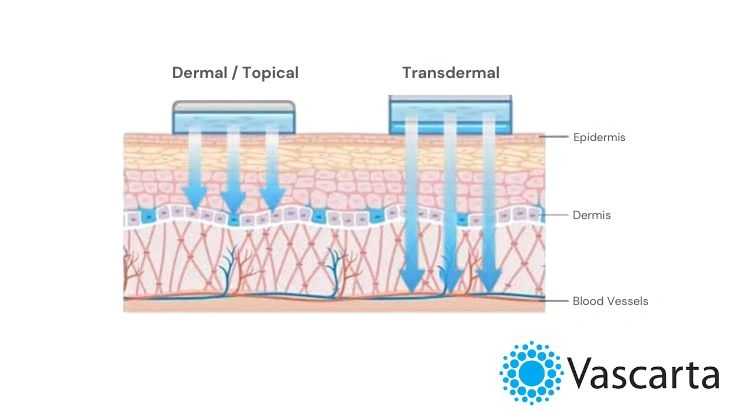
At its core, transdermal delivery means getting a drug through the skin and into the bloodstream, where it can travel throughout the body. That’s different from a typical topical product, which is meant to act right where you put it, not enter general circulation.
Building a transdermal product, though, is a lot more involved than just mixing an active ingredient into a sticky patch. It touches on skin biology, chemistry, materials science, manufacturing, and regulatory strategy all at once. The FDA treats this as its own category of pharmaceutical development, with specific guidance covering everything from how well a patch sticks to how heat affects the way a drug is absorbed.
For pharmaceutical companies exploring advanced drug delivery, choosing the right development approach is an important part of turning a promising drug candidate into a practical pharmaceutical product. Companies such as Vascarta can help bring attention to the formulation and drug-delivery challenges that need to be considered when evaluating innovative delivery approaches such as transdermal systems.
Below, we’ll walk through how transdermal delivery actually works, why companies pursue it, which drugs are good candidates, what makes development difficult, and where the field seems to be headed.
What Transdermal Drug Delivery Actually Means?
Transdermal drug delivery is the controlled release of a medication through the skin so that it reaches systemic circulation meaning your bloodstream, not just the tissue directly under the patch.
Picture a medicated patch stuck to someone’s arm. The drug slowly releases from the patch, works its way through the layers of skin, and eventually enters the blood. That’s the basic mechanism.
But here’s a common point of confusion worth clearing up: not everything you put on your skin is “transdermal.”
Transdermal vs. Topical: What’s the Difference?
People often use “topical” and “transdermal” as if they mean the same thing. In pharmaceutical development, they don’t.
- Topical products are generally built to act at or near the spot where you apply them.
- Transdermal products are built to push the drug past the skin and into your bloodstream.
Think of a cream for a rash (topical, staying local) versus a patch delivering pain medication for days at a time (transdermal, going systemic). This distinction shapes almost everything about how a product gets formulated and tested, so it’s not just semantics — it determines the entire development path.
How Does a Drug Actually Get Through Skin?
To understand transdermal delivery, you first have to appreciate what skin is designed to do: keep things out. The outermost layer, called the stratum corneum, is essentially your body’s first line of defense against the outside world, which is exactly what makes transdermal delivery so tricky.
For a drug to make it from a patch into your bloodstream, it typically has to go through several stages:
- Release: The drug comes out of the patch or formulation
- Penetration: It starts crossing that tough outer skin layer
- Diffusion: It moves through the deeper skin layers
- Absorption: It reaches blood vessels sitting under the skin
- Circulation: It enters the bloodstream and can finally do its job
How fast (or whether) this happens depends on a long list of variables: the size of the drug molecule, how fat-soluble it is, its potency, how concentrated it is, the permeability of the skin at the application site, the formulation itself, skin condition, temperature, how long it’s in contact with the skin, and how the delivery system is engineered.
This is exactly why a drug that works fine as a pill doesn’t automatically translate into a good patch. The two delivery routes demand completely different properties.
Why Companies Pursue Transdermal Delivery?
Transdermal systems are appealing because, done well, they can offer a genuinely better experience for patients. Here’s what’s typically on the table:
Steady, Controlled Release
A well-designed patch releases medication gradually over hours or days, which can help keep drug levels more consistent without needing multiple doses throughout the day. The actual release curve still depends heavily on the specific drug and device design.
Skipping the Digestive System
Oral drugs have to survive the stomach and intestines before they’re absorbed. Transdermal delivery sidesteps that altogether, which can be useful for drugs that don’t hold up well to digestion or for patients who have trouble swallowing pills.
Potentially Dodging First-Pass Metabolism
Many oral drugs get broken down significantly by the liver before they ever reach the rest of the body, a process known as first-pass metabolism. Transdermal delivery can bypass this pathway for suitable drugs. That said, this isn’t a guarantee of better performance; the drug still has to cross the skin in a meaningful quantity to work.
Simpler for Patients
Instead of tracking multiple pills throughout the day, a patient might just apply one system per the product’s schedule. For people managing long-term conditions, that kind of simplicity can genuinely improve how consistently they take their medication.
More Even Drug Levels
Because delivery is gradual rather than a single spike, some patients experience fewer of the peaks and dips associated with certain oral dosing schedules though again, this varies by drug.
Notably, FDA guidance treats product design and actual performance as tightly linked here. Something as seemingly minor as how well a patch sticks, or how it responds to body heat, can directly change how much drug a patient actually receives.
Which Drugs Work Well Transdermally?
Not every drug is a good fit for a patch that’s one of the most important things to understand about this delivery method. Developers have to evaluate whether a given molecule can realistically cross the skin barrier in useful amounts.
Some approved transdermal products today target:
- Smoking cessation
- Hormone therapy
- Motion sickness
- Certain neurological conditions
- Pain management
- Cardiovascular treatment
That range shows transdermal delivery isn’t limited to one type of medicine, but success with one drug doesn’t guarantee success with another. Every active ingredient has to be evaluated on its own merits.
What Makes a Drug a Good Candidate?
A few physical and chemical properties tend to matter most:
Molecule size: Smaller molecules generally have an easier time crossing skin than large ones. This is a big part of why traditional passive patches have historically worked best for smaller drug molecules.
Lipophilicity: How well a drug interacts with the fatty structures in skin affects how easily it penetrates. But it’s not as simple as “more fat-soluble equals better”, the formulation and how the drug partitions between layers matters too.
Potency: A patch only has so much surface area to work with, so highly potent drugs ones that work in small quantities tend to be more practical candidates.
Required dose: If a drug needs a large daily dose, fitting enough of it into a patch while keeping the product usable can be genuinely difficult.
Stability: The drug needs to hold up chemically and physically throughout manufacturing, storage, and the entire time someone is wearing it.
Skin compatibility: The product shouldn’t cause unacceptable irritation or allergic reactions while doing its job.
None of these factors get evaluated in isolation; developers weigh them together.
What’s Inside a Transdermal Patch?
A patch might look simple from the outside, but it’s a carefully engineered pharmaceutical product. Depending on the design, it typically includes:
- Backing layer: Shields the system from the outside environment
- Drug matrix or reservoir: Where the active ingredient actually lives; in matrix systems it’s blended into a polymer or adhesive, while reservoir systems keep it in a separate compartment
- Adhesive: keeps the whole thing stuck to your skin (more important than it sounds more on that below)
- Rate-controlling component: Some designs use a membrane to regulate how fast the drug is released
- Release liner: A protective layer removed right before application
Change one piece of this puzzle, and you can affect everything else. Swap out the adhesive, for instance, and you might inadvertently change drug release, skin irritation potential, manufacturability, or shelf stability. That interconnectedness is a big reason transdermal development requires such a coordinated, cross-disciplinary approach.
Why Adhesion Is a Bigger Deal Than It Sounds?
A patch that falls off isn’t delivering its intended dose full stop. That makes adhesion a safety and efficacy issue, not just a matter of comfort.
The FDA has been explicit that adhesion performance directly affects how safe and effective a transdermal product is. A patch that doesn’t stick well can lead to underdosing. On the flip side, if a patient replaces a partially detached patch too soon, they could end up with more drug exposure than intended.
There’s also the question of what happens to a patch after it’s removed. Some active ingredient is often still present in the system and FDA guidance specifically calls for developers to account for this “residual drug” throughout the entire product lifecycle, from initial design through manufacturing.
In practice, developers have to think through questions like:
- Will it stay on during normal daily activity?
- Does sweating compromise the adhesive?
- What if it partially peels off?
- How much drug is left in the patch after use, and could that create accidental exposure for someone else?
These aren’t afterthoughts, they’re central to responsible product design.
What is the Role of Heat in Drug Delivery?
Temperature is another factor that can quietly change how a transdermal system performs. Applying heat, say, from a heating pad, hot shower, or even a fever can potentially increase how much drug crosses the skin, depending on the specific product.
The FDA calls this out specifically as something developers need to account for. For patients, it’s a good reason to actually follow the instructions on the label rather than assume a patch behaves the same no matter what. For developers, it means testing has to reflect how people actually use these products in real life, not just controlled lab conditions.
The Real Challenges of Transdermal Delivery
For all its advantages, transdermal delivery isn’t easy to pull off. A few recurring obstacles:
- Skin is really good at its job: The same barrier that protects your body from bacteria and chemicals also blocks a lot of drug molecules from getting through which is precisely why many drugs simply aren’t viable candidates for passive delivery.
- Large molecules struggle: Bigger biological molecules, like many modern biologics, often can’t cross intact skin efficiently at all, which is pushing researchers toward newer delivery-enhancing technologies.
- Limited space, limited dose: A patch can only hold so much drug and still function properly, which caps how much medication can realistically be delivered this way.
- Irritation risk. The drug itself, the adhesive, or other ingredients can trigger skin irritation or allergic responses, something the FDA has published specific guidance on evaluating.
- Manufacturing is complicated: These products blend traditional pharmaceutical formulation with physical, almost device-like engineering, which means manufacturers have a lot more variables to keep under tight control.
How a Transdermal Product Actually Gets Developed
Getting a transdermal product from concept to market generally follows a fairly structured path:
- Characterize the drug: Study its properties as they relate to skin penetration
- Preformulation work: check solubility, stability, compatibility with potential excipients
- Formulation development: Test different matrices, adhesives, and delivery strategies
- Skin permeation studies: often done in lab and ex vivo settings to see how the drug actually moves through skin
- Drug release testing: Confirm the product releases medication the way it’s supposed to
- Adhesion and safety evaluation: Make sure it stays on and doesn’t cause unacceptable irritation
- Stability testing: Check performance under real-world storage conditions
- Scale-up and manufacturing: Turn a lab formulation into a reliable, repeatable commercial process
- Regulatory review: Meet the quality, safety, and efficacy standards regulators expect
FDA guidance specifically addresses several of these stages, including manufacturing controls and finished-product testing.
Where the Technology Is Headed?
Patches aren’t the only story anymore. Researchers are actively working on ways to get more drugs through skin more reliably, including:
- Microneedles: Tiny structures that create temporary micro-channels through the outer skin layer, opening the door for compounds that can’t otherwise get through
- Iontophoresis: Uses a mild electrical current to help push certain molecules across the skin
- Sonophoresis: Uses ultrasound waves to temporarily increase skin permeability
- Nanotechnology: Nanocarriers designed to improve how drugs are transported, targeted, and released
- Advanced polymers: Newer materials engineered for more precise control over release rates
These approaches are exciting because they could expand the list of drugs that are actually viable candidates for transdermal delivery, including some large molecules that currently can’t be delivered this way at all. But it’s worth being realistic: a promising result in the lab is a long way from an approved product. Getting there still requires solid clinical evidence of safety and effectiveness.
Why This Matters for Pharmaceutical Companies?
For drug makers, transdermal delivery can be more than just an alternate way to package an existing drug, it can be a genuine strategic opportunity. A molecule that’s already proven effective might be worth revisiting in patch form if there’s a strong scientific and commercial case for it.
Reasons companies explore this route include:
- Making treatment easier for patients to stick with
- Stretching out dosing intervals
- Building in more controlled, predictable release
- Working around limitations of oral dosing
- Opening up new patent and lifecycle opportunities
But the decision shouldn’t be made just because it’s technically possible. The better question developers need to ask isn’t “can this go into a patch?” it’s “can this drug cross the skin safely, reliably, and in amounts that actually make a therapeutic difference?”
That distinction is really what separates successful transdermal programs from ones that stall out.
Exploring Transdermal Drug Delivery With Vascarta
For pharmaceutical companies exploring advanced drug-delivery strategies, understanding the scientific and formulation requirements is an important first step. Transdermal development requires careful consideration of drug properties, skin permeability, formulation design, release characteristics, stability, and manufacturing requirements.
Vascarta provides a point of reference for organizations exploring pharmaceutical innovation and evaluating opportunities in advanced drug-delivery development. Companies interested in exploring these opportunities can review Vascarta’s capabilities and determine whether its expertise aligns with their specific development objectives.
The Bottom Line
Transdermal drug delivery uses the skin as a pathway into the bloodstream, but it’s far from a simple concept. Skin is an excellent barrier by design, and getting a drug through it reliably, safely, and in a therapeutically useful amount takes serious scientific and engineering work.
Building a successful transdermal product means understanding drug chemistry, skin biology, formulation science, adhesion, manufacturing, and regulatory expectations all at the same time, and all interconnected. The FDA’s guidance reflects just how tightly these pieces are linked to a product’s overall safety and performance.
As tools like microneedles, nanocarriers, and next-generation polymers continue to mature, the range of drugs that could realistically be delivered through the skin is likely to keep expanding. But the fundamentals won’t change: a transdermal product isn’t just a sticker with medicine in it. It’s a precisely engineered system built to control exactly how a drug moves from the outside of the body to the inside.
FAQ
What is transdermal drug delivery, simply put?
It’s a way of delivering medication through the skin so it can enter your bloodstream and work throughout the body. A patch is the classic example.
How is this different from a topical product?
Topical products are meant to act locally, right where you apply them. Transdermal products are designed to move the drug into systemic circulation instead.
What are the main benefits?
Controlled, gradual release; bypassing the digestive system; potentially avoiding first-pass liver metabolism; and simpler dosing for patients.
Can any drug be turned into a patch?
No. A lot of drugs simply don’t have the right physical and chemical properties to cross skin efficiently. Size, fat-solubility, potency, required dose, and stability all play a role.
What new technologies are improving this field?
Microneedles, iontophoresis, sonophoresis, nanotechnology, and advanced polymer systems are among the leading areas of research.